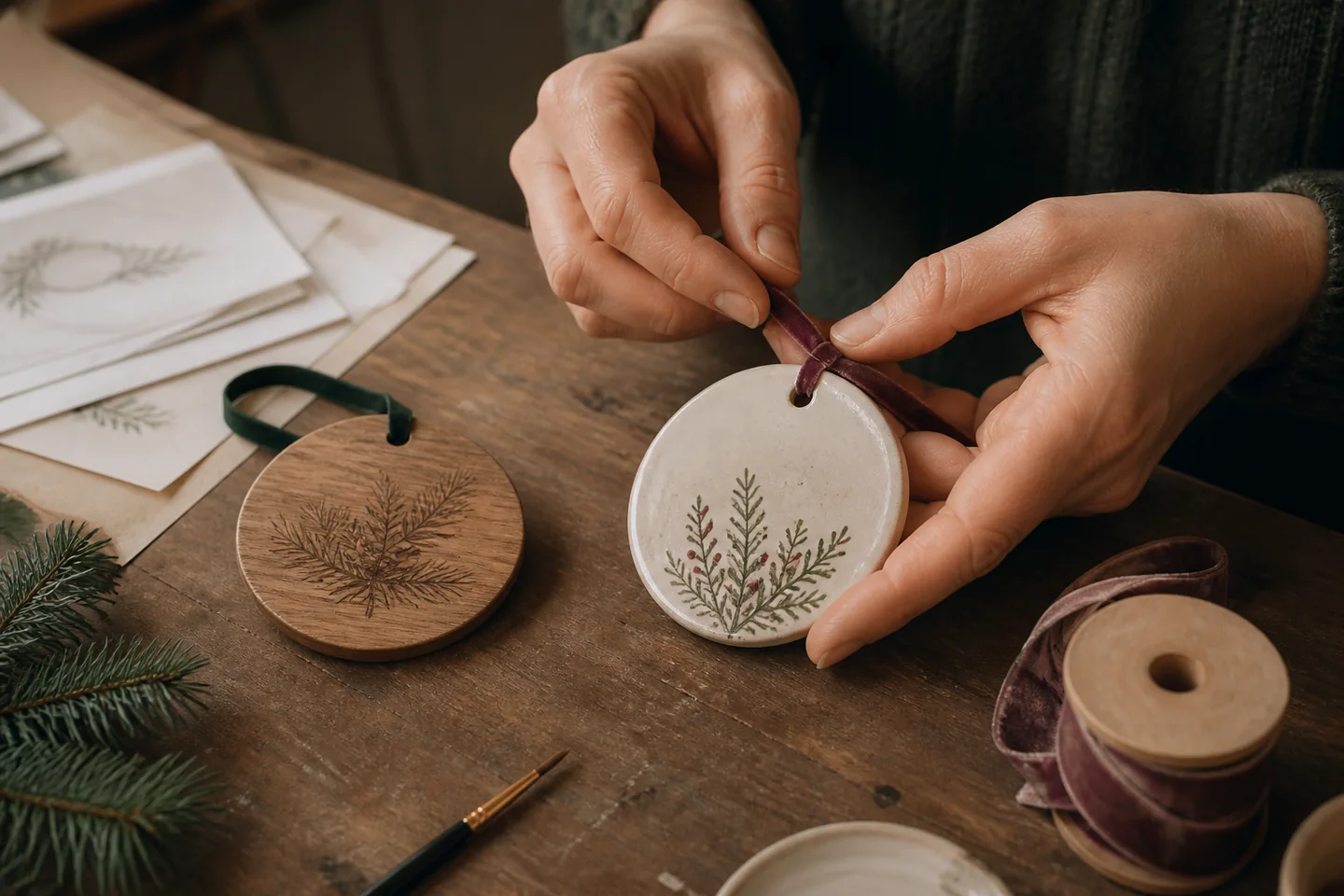
The material decision becomes much easier after the design exists. A child’s pencil line, house outline, handwritten recipe, or spare set of names can settle beautifully into wood. A wedding photograph, golden retriever coat, school colors, or painted front door needs a surface that carries color.
“Engraved” and “printed” describe the personalization method, while wood, ceramic, metal, acrylic, and glass describe the surface. Read both parts of a listing. Two ceramic ornaments may use different printing methods, and two wood designs may be engraved, printed, painted, or cut through.
Names, handwriting, maps, silhouettes
Check crop and printing sides
Confirm listed dimensions and weight
Reflection and transparency change the art
Engraved wood keeps the line and the grain
Wood is at its best with names, dates, handwriting, house drawings, maps, pet silhouettes, and other artwork that remains clear as a line. The grain stays visible beneath and around the engraving, so every piece carries small natural variations in tone and pattern.
Fine photographs, soft shadows, and subtle coat colors lose what they need when converted to a simple engraved line. A portrait artist can redraw a face for engraving, but the result will be line art rather than a photographic copy. Check that the preview shows the actual conversion, not only the original image beside a sample ornament.
Thickness and cut shape matter too. A solid round or oval piece handles storage differently from a delicate name cutout with narrow joins. Look at the weakest bridge in a cut-through design and decide whether it suits the way your ornament box is packed.
Printed ceramic gives photographs a familiar weight
Ceramic offers a smooth, opaque field for photographs, watercolor portraits, illustrated families, invitation artwork, and full-color lettering. White ceramic keeps colors close to the supplied image without the wood grain showing through. Matte and glossy finishes can change how much light reflects across the print.
The tradeoff is weight and breakability. Check the listed diameter, thickness, and weight before choosing a fine branch or mailing the gift. Ask whether the back is blank, repeats the front, or accepts a second design. A mock-up showing two sides does not always mean both are included in the base price.
Printed metal is thin, light, and good for wider images
Metal can carry photographs, brand colors, maps, tickets, and illustrated scenes on a thinner piece than ceramic. That makes it useful for panoramic family or travel photographs, gifts sent through the mail, and larger shapes that would feel heavy in another material.
Check whether the print is matte or glossy, one-sided or two-sided, and whether the cut edge is visible. “Metal” may describe aluminum, steel, or another product, each with a different weight and finish. Use the specifications in the listing rather than assuming every metal ornament feels the same.
Acrylic can be clear, frosted, mirrored, or opaque
Acrylic is not one visual effect. Clear acrylic lets the tree show through; frosted acrylic softens it; mirrored surfaces catch the room; white or opaque acrylic behaves more like a light printed panel. Look at product photographs against both a pale and dark background to understand what the finished piece will reveal.
Printing may sit on the front, back, or beneath the clear surface. Ask which side faces outward and whether the reverse reads correctly. New acrylic pieces may arrive with a protective film that should be removed, but follow the seller’s instructions before peeling anything.
Glass works with light and spare lettering
Clear or frosted glass can make short engraved, etched, painted, or printed lettering feel delicate. Tree lights and branches become part of the background, which is beautiful for a few names or a date and less helpful for a dense photograph or small low-contrast text.
Check whether the piece is solid glass, a glass disc, or a hollow shape; the weight and storage needs differ. Give it a stable branch and its own wrapping in the ornament box. For a gift that will be mailed or handled by children, another material may be easier.
Fabric, felt, clay, and paper keep the hand of the maker
Embroidery, felt appliqué, hand-shaped clay, salt dough, and paper bring texture and visible handwork. They suit children’s first Christmases, snowmen, family figures, pet shapes, and annual crafts. Fine type and exact photograph detail are not their strength; touch, dimension, and irregularity are.
Ask how names and dates are applied and how the piece should be stored. Fabric can crease, paper needs protection from damp, and raised clay details need room around them. The maker’s care instructions should stay in the box.
Use the design as the decision tree
- Choose engraved wood for handwriting, names, maps, silhouettes, and clean line drawings.
- Choose ceramic for portraits, photographs, invitation art, and colored family illustrations when traditional weight suits the tree.
- Choose metal for full-color printing, wider photographs, mailing, and larger lightweight pieces.
- Choose acrylic when transparency, a cut shape, low weight, or a modern surface is part of the design.
- Choose glass for short lettering and a design meant to change with the tree lights behind it.
The preview should resemble the finished method
A useful preview shows the photograph crop, type size, line conversion, hanging hole, and relationship between artwork and material. It should make clear which side is being shown and how wood grain, transparency, reflection, or a cut edge affects the design.
For a portrait converted to line art, inspect eyes, ears, hands, or architectural details closely. For a photograph, view faces at the physical ornament size. For engraving, make sure thin lines have not vanished and dark areas have not merged.
Curated ornaments
Compare ornament materials in the full edit
Look at the same questions across each listing: artwork, application method, dimensions, weight, sides, and preview.
Good to knowSome links on this page are affiliate links: if you buy through them we may earn a small commission, at no extra cost to you. We only feature ornaments we would give ourselves.
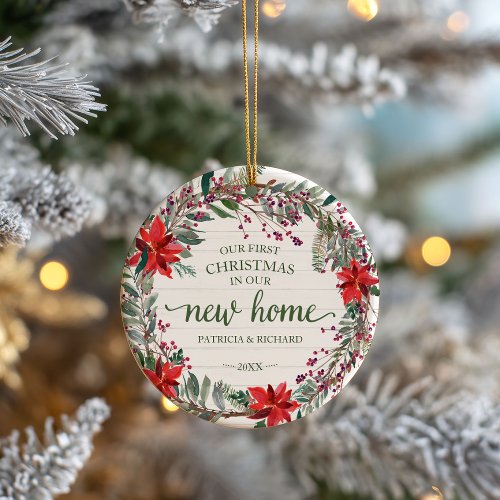
Our First Christmas In Our New Home Rustic Wreath Ceramic Ornament
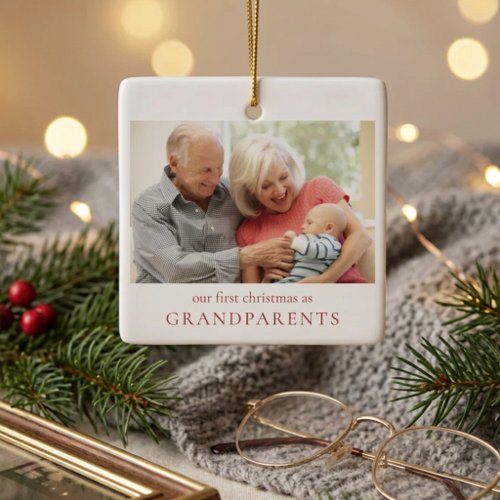
Our First Christmas as Grandparents Baby Photo Ceramic Ornament
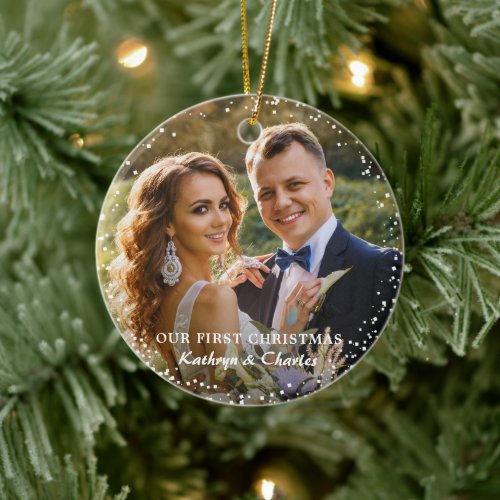
Modern Our First Christmas As Mr & Mrs Floral Ceramic Ornament
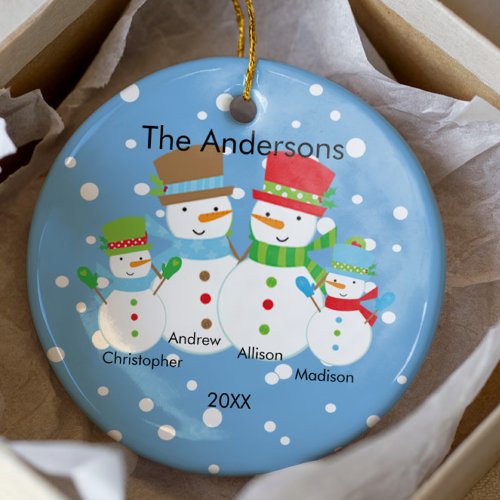
Cute Snowman Family of 4 Christmas Ornament
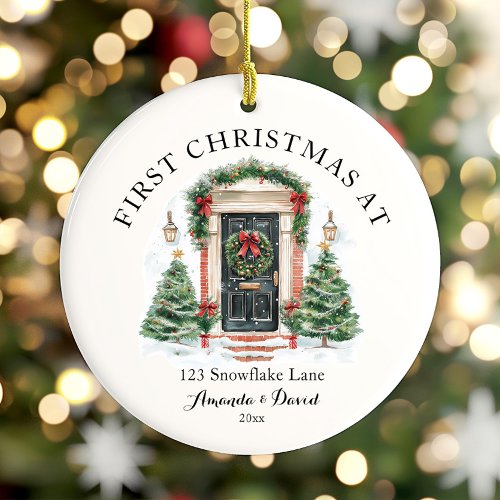
Personalized First Christmas At Our New Home Ceramic Ornament
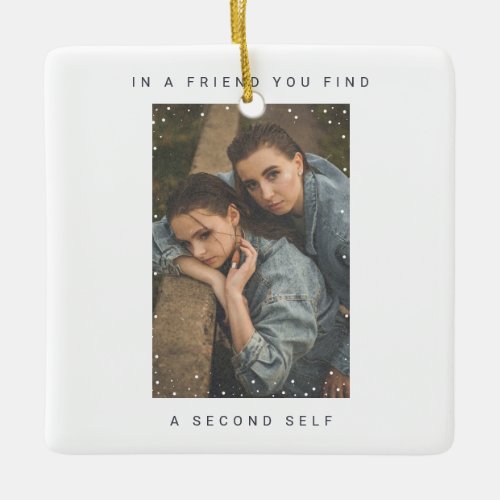
Minimalist Two Photo Snowfall Best Friends Photo Ceramic Ornament
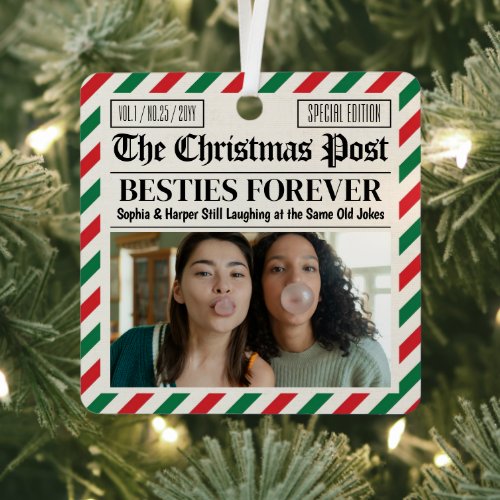
Custom Christmas Newspaper Friend Gift for Besties Metal Ornament
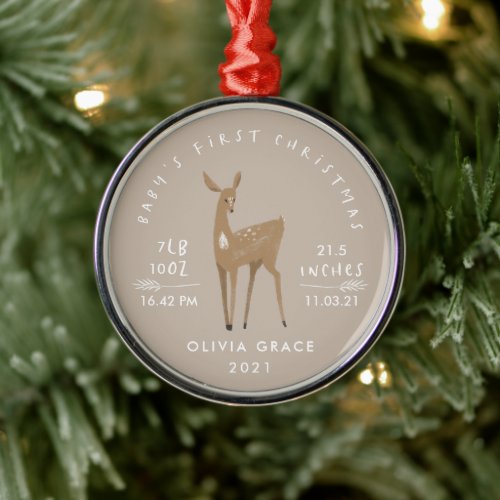
First Christmas baby details deer Metal Ornament
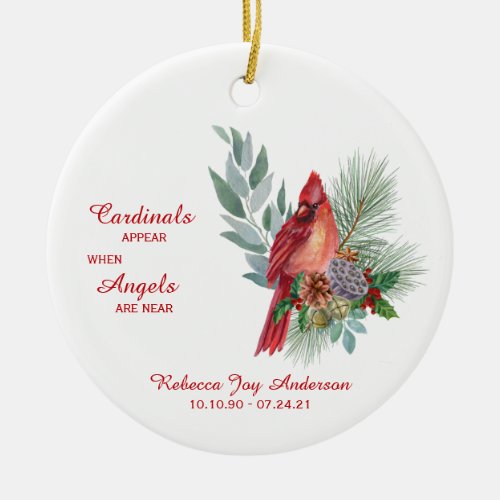
Cardinals Appear Angels Near Photo Memorial Ceram Ceramic Ornament
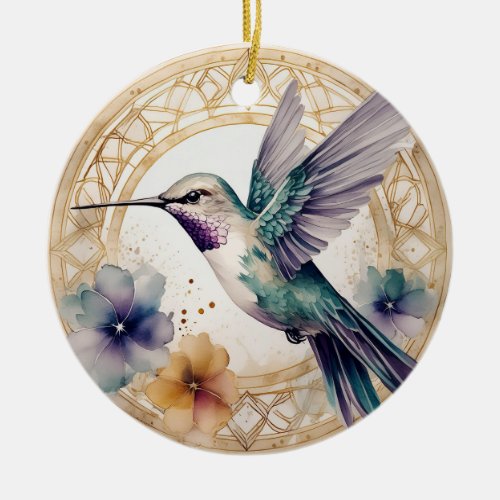
Hummingbird Personalized Christmas Ornament
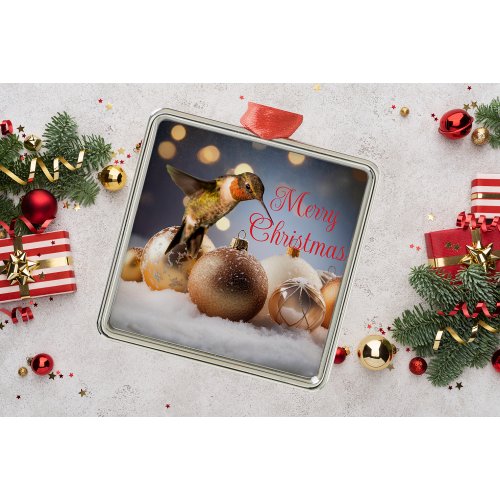
Hummingbird Christmas Card Metal Ornament
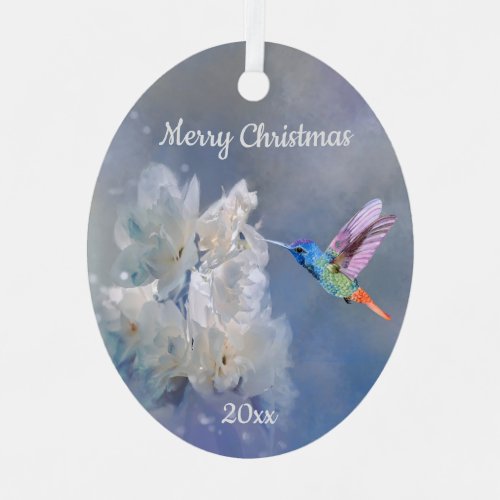
Hummingbird Bird White Garden Flower Christmas Me Metal Ornament
Good to know
Questions people ask
Is engraving better than printing?
Neither is better in general. Engraving suits lines, names, maps, and handwriting. Printing suits photographs, color, gradients, and illustrated detail.
Which material is best for a photograph?
Ceramic, metal, and opaque acrylic can all carry photographs. Compare print method, finish, crop, size, weight, and whether the back is included.
Which ornament is lightest?
Thin metal, acrylic, felt, and paper can be light, but dimensions and construction matter. Use the listed product weight when branch strength or mailing cost matters.
Can wood show a full-color portrait?
Wood can be printed in color, but an engraved portrait will be converted to line and tone. Confirm whether the listing is engraved, printed, painted, or combines methods.
Is two-sided personalization included?
It varies by listing. Check whether the back is blank, repeats the front, or requires an added personalization option.
More ideas in your inbox
New ornaments, gift ideas, and Christmas inspiration
Get our latest ornament finds, ideas for people on your gift list, and tips for personalizing your favorites.
Continue reading